Activation Functions

(सक्रियण फलन: Sigmoid, Tanh, ReLU)


🔷 1. परिचय (Introduction)

Neural Network में Activation Function यह तय करता है कि कोई neuron “active” होगा या नहीं।
यह non-linearity लाता है, ताकि मॉडल complex patterns को सीख सके।


🔹 2. आवश्यकता क्यों? (Why Needed?)

बिना Activation Function के neural network एक simple linear model बन जाएगा।

📌 With Activation Function → Deep, non-linear models
📌 Without Activation → सिर्फ linear transformation


🔶 3. मुख्य Activation Functions


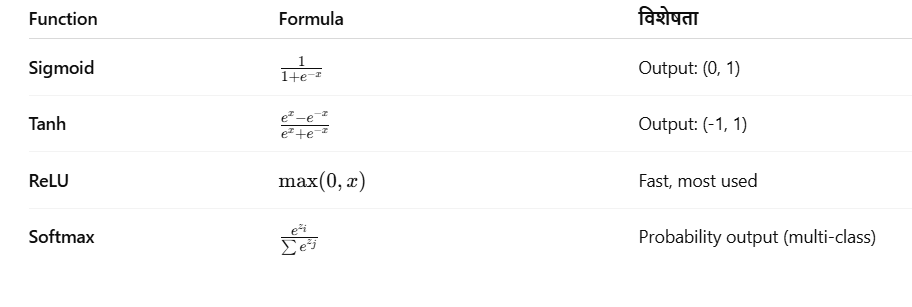
🔸 A. Sigmoid Function

📌 Output Range: (0, 1)
📌 उपयोग: Binary classification, Logistic regression

✅ लाभ:

  • Probability की तरह आउटपुट देता है
  • Smooth gradient

❌ कमी:

  • Gradient vanishing problem
  • Output range छोटा है

📈 ग्राफ: S-shaped (S-curve)


🔸 B. Tanh (Hyperbolic Tangent)

📌 Output Range: (-1, 1)
📌 उपयोग: जब input data zero-centered हो

✅ लाभ:

  • Stronger gradients than sigmoid
  • Centered at 0 → better learning

❌ कमी:

  • Still suffers from vanishing gradient (large input पर gradient → 0)

📈 ग्राफ: S-shaped but centered at 0


🔸 C. ReLU (Rectified Linear Unit)

📌 Output Range: [0, ∞)
📌 उपयोग: Deep Networks में सबसे आम activation

✅ लाभ:

  • Fast computation
  • Sparse activation (only positive values pass)
  • No vanishing gradient for positive inputs

❌ कमी:

  • Dying ReLU Problem: negative input → always zero gradient

📈 ग्राफ: 0 for x < 0, linear for x > 0


🔁 तुलना तालिका (Comparison Table)

FeatureSigmoidTanhReLU
Output Range(0, 1)(-1, 1)[0, ∞)
Non-linearity
Vanishing GradientYesYesNo (partial)
SpeedSlowSlowFast
UsageBinary outputsHidden layers (earlier)Deep models (most common)

💻 PyTorch Code: Activation Functions

import torch
import torch.nn.functional as F

x = torch.tensor([-2.0, 0.0, 2.0])

print("Sigmoid:", torch.sigmoid(x))
print("Tanh:", torch.tanh(x))
print("ReLU:", F.relu(x))

🎯 Learning Summary (सारांश)

  • Sigmoid और Tanh smooth functions हैं लेकिन saturation (vanishing gradient) से ग्रस्त हो सकते हैं
  • ReLU simple, fast, और deep networks में सबसे अधिक उपयोगी है
  • Hidden layers में ReLU सबसे लोकप्रिय choice है

📝 अभ्यास प्रश्न (Practice Questions)

  1. Sigmoid और Tanh में क्या अंतर है?
  2. ReLU का गणितीय फॉर्मूला क्या है?
  3. Dying ReLU problem क्या है?
  4. यदि input -3 हो तो ReLU का output क्या होगा?
  5. नीचे दिए गए PyTorch कोड का आउटपुट बताइए:

x = torch.tensor([-1.0, 0.0, 1.0]) print(torch.tanh(x))

Perceptron and Multi-layer Perceptron (MLP)

(परसेप्ट्रॉन और मल्टी-लेयर परसेप्ट्रॉन)


🔷 1. Perceptron: Single-layer Neural Unit

➤ परिभाषा:

Perceptron एक single-layer feedforward neural network है जो binary classification करने में सक्षम होता है।

🧮 गणितीय रूप:


📌 विशेषताएँ:

गुणविवरण
Structureएक ही layer (input से output)
UseLinear binary classification
LimitationNon-linear problems (जैसे XOR) solve नहीं कर सकता

🔁 Simple Diagram:


🔶 2. MLP: Multi-layer Perceptron

➤ परिभाषा:

MLP एक feedforward artificial neural network है जिसमें एक या अधिक hidden layers होते हैं।

🏗️ संरचना:

Input → Hidden Layer(s) → Output
(हर layer में neurons होते हैं, और हर neuron activation function apply करता है)


📌 विशेषताएँ:

गुणविवरण
Structure2+ layers (input, hidden, output)
UseComplex, non-linear problems
TrainingBackpropagation + Gradient Descent
ActivationReLU, sigmoid, tanh, softmax

🔁 MLP Diagram (Structure):


💻 PyTorch में एक सरल MLP कोड:

import torch.nn as nn

class MLP(nn.Module):
def __init__(self):
super(MLP, self).__init__()
self.net = nn.Sequential(
nn.Linear(3, 5), # Input layer → Hidden
nn.ReLU(),
nn.Linear(5, 1), # Hidden → Output
nn.Sigmoid()
)

def forward(self, x):
return self.net(x)

🔄 तुलना तालिका: Perceptron vs MLP

विशेषताPerceptronMLP
LayersSingleMultiple (hidden included)
ActivationStep/SigmoidReLU, Sigmoid, Tanh, Softmax
Data Handlingकेवल linearly separableComplex, non-linear data
LearningSimple weight updateBackpropagation algorithm

🎯 Learning Summary:

  • Perceptron एक सबसे सरल Neural Network है।
  • MLP में Hidden layers होने से यह complex pattern सीख सकता है।
  • Deep Learning में MLP सबसे बुनियादी और आधारभूत संरचना है।

📝 अभ्यास प्रश्न (Practice Questions):

  1. Perceptron का गणितीय फ़ॉर्मूला क्या है?
  2. Perceptron और MLP में मुख्य अंतर क्या है?
  3. MLP में activation functions क्यों ज़रूरी होते हैं?
  4. Perceptron XOR problem क्यों solve नहीं कर सकता?
  5. एक सरल MLP में कितनी layers होती हैं?

Biological Neuron vs Artificial Neuron

(जैविक न्यूरॉन बनाम कृत्रिम न्यूरॉन)


🔹 1. Biological Neuron (जैविक न्यूरॉन) क्या होता है?

यह मानव मस्तिष्क की मूल इकाई है जो संकेतों (signals) को लेती है, प्रक्रिया करती है और अन्य न्यूरॉनों को भेजती है।

🔬 संरचना (Structure):

भागकार्य
DendritesInput signal लेते हैं
Cell Body (Soma)Input को process करता है
AxonOutput signal को भेजता है
Synapseदो neurons के बीच signal पास करता है

🧠 कार्यप्रणाली:

  • जब कुल Input signal एक Threshold से ऊपर जाता है, तब neuron “Fire” करता है (Signal भेजता है)।

🔹 2. Artificial Neuron (कृत्रिम न्यूरॉन)

Deep Learning में Artificial Neuron का उपयोग किया जाता है, जो Biological neuron से प्रेरित है लेकिन गणितीय होता है।

🔢 कार्यप्रणाली:

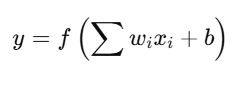
  • xi​: Inputs
  • wi: Weights
  • b: Bias
  • f: Activation function
  • y: Output

🔁 तुलनात्मक तालिका (Comparison Table)

विशेषताजैविक न्यूरॉनकृत्रिम न्यूरॉन
संरचनाDendrites, Axon, SynapseInputs, Weights, Activation
संकेत (Signal)ElectrochemicalNumerical (वास्तविक संख्या)
प्रसंस्करणThreshold based firingWeighted sum + Activation
सीखनाSynapse के बदलाव सेWeights update (Gradient Descent)
नेटवर्कBiological Neural NetworkArtificial Neural Network (ANN)

🧠 विज़ुअल तुलना (Diagram)

Biological Neuron:                        Artificial Neuron:

Input (Dendrites) x1, x2, x3 →
↓ ↓
Cell Body (Summation) w1x1 + w2x2 + w3x3 + b
↓ ↓
Axon → Output Activation Function → Output

🔍 निष्कर्ष (Conclusion):

  • Artificial Neurons inspired हैं Biological Neurons से, परंतु वे सरल गणितीय मॉडल हैं।
  • एक Artificial Neuron सिर्फ एक छोटा सा भाग है Deep Learning नेटवर्क का, लेकिन उसका inspiration मानव मस्तिष्क से आया है।
  • जैसा मानव मस्तिष्क सिखता है अनुभव से, वैसे ही ANN सिखता है डेटा से।

🎯 उद्देश्य (Objective Summary)

  • जैविक न्यूरॉन की संरचना और कार्यप्रणाली समझना
  • कृत्रिम न्यूरॉन का गणितीय स्वरूप जानना
  • दोनों के बीच की समानता और भिन्नता पहचानना
  • Deep Learning में इस संबंध का महत्व समझना

📝 अभ्यास प्रश्न (Practice Questions)

  1. Dendrites और Axon का कार्य क्या होता है?
  2. Artificial Neuron किस प्रकार का Input लेता है?
  3. दोनों प्रकार के न्यूरॉन में signal कैसा होता है?
  4. एक Artificial Neuron का गणितीय formula लिखिए।
  5. कृत्रिम न्यूरॉन जैविक न्यूरॉन से कैसे प्रेरित है?

Neural Networks Fundamentals

(न्यूरल नेटवर्क की मूल बातें)


🔷 1. परिचय (Introduction)

Neural Network एक ऐसा गणितीय मॉडल है जो इंसानी मस्तिष्क की तरह सीखने का प्रयास करता है। यह इनपुट को लेता है, layers के ज़रिए प्रोसेस करता है और फिर आउटपुट देता है।

Deep Learning = कई layers वाले Neural Network


🧱 2. Basic Structure of a Neural Network

एक Neural Network में मुख्यतः तीन प्रकार की layers होती हैं:

Layer Nameकार्य
Input Layerबाहरी डेटा को लेती है
Hidden Layersडेटा को प्रोसेस करती हैं
Output Layerअंतिम निर्णय या अनुमान देती है

🔁 Working Flow:

Input → Weights × Input + Bias → Activation → Output

🧠 3. Perceptron – सबसे सरल Neural Unit

➤ परिभाषा:

Perceptron एक single-layer neural network है, जो binary classification कर सकता है।

Perceptron Formula:

जहाँ:

  • xi​: Input
  • wi: Weights
  • b: Bias
  • f: Activation Function (जैसे: Step Function)

💡 4. Activation Functions

Activation function यह तय करता है कि कोई neuron activate होगा या नहीं। यह non-linearity introduce करता है।


🔂 5. Forward Pass & Backpropagation

🔄 Forward Pass:

Input → Output तक की गणना
(Weights, Biases, Activation के साथ)

🔁 Backpropagation:

Loss को Output से Input की तरफ propagate करना
→ Gradient निकालना (Chain Rule)
→ Weights update करना (Gradient Descent)


💻 आवश्यक कोड: एक सिंपल Neural Network (PyTorch)

import torch
import torch.nn as nn

# Simple feedforward network
class SimpleNN(nn.Module):
def __init__(self):
super().__init__()
self.fc1 = nn.Linear(2, 4) # Input layer to hidden
self.relu = nn.ReLU()
self.fc2 = nn.Linear(4, 1) # Hidden to output

def forward(self, x):
x = self.fc1(x)
x = self.relu(x)
return self.fc2(x)

model = SimpleNN()
print(model)

📌 Visualization: Neural Network Structure

Input Layer: x1, x2

Hidden Layer (Neurons)

Activation (ReLU)

Output Layer: ŷ

🎯 Chapter Objectives (लक्ष्य)

  • Neural Network की मूल संरचना को समझना
  • Perceptron की कार्यप्रणाली को जानना
  • Activation Functions का महत्व जानना
  • Forward और Backpropagation के बीच का संबंध समझना
  • PyTorch में एक सरल मॉडल बनाना

📝 अभ्यास प्रश्न (Practice Questions)

  1. Neural Network में तीन मुख्य layers कौन-सी होती हैं?
  2. Perceptron का गणितीय फ़ॉर्मूला लिखिए और समझाइए।
  3. ReLU और Sigmoid में क्या अंतर है?
  4. Forward Pass और Backpropagation क्या होते हैं?
  5. नीचे दिए गए कोड में कितने neurons hidden layer में हैं?

self.fc1 = nn.Linear(3, 5)


Chain Rule and Partial Derivatives

(चेन रूल और आंशिक अवकलज – मल्टीलेयर नेटवर्क में Gradient की कुंजी)

🔷 1. परिचय (Introduction)

Deep Learning में हर layer interconnected होती है, और output पर effect डालती है।Gradient को backward propagate करने के लिए हम दो concepts पर निर्भर करते हैं:

  • Partial Derivatives (∂)
  • Chain Rule

यह अध्याय Neural Networks की training को समझने में केंद्रीय भूमिका निभाता है

🔹 2. Partial Derivatives (आंशिक अवकलज)

➤ परिभाषा:

जब किसी फंक्शन में एक से अधिक variable हों (multivariable function), तब किसी एक variable के respect में निकाले गए derivative को Partial Derivative कहते हैं।

📌 Deep Learning में उपयोग:

  • Loss Function कई weights पर निर्भर करता है
  • हर weight का gradient आंशिक अवकलज से निकाला जाता है
  • Vector form में ये gradients बनाते हैं: Gradient Vector

🔹 3. Chain Rule (श्रृंखलित नियम)

➤ परिभाषा:

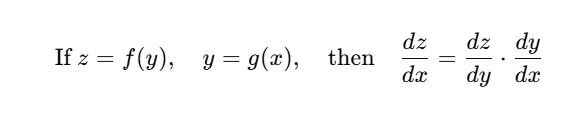
जब एक function दूसरे function के अंदर होता है (nested function), तब derivative निकालने के लिए हम Chain Rule का उपयोग करते हैं।

➤ Deep Learning Analogy:

मान लीजिए:

👉 यही Backpropagation में होता है — gradients हर layer से पीछे propagate होते हैं।

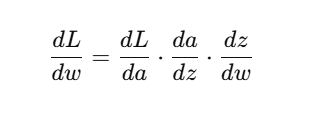
📉 4. Multivariable Chain Rule Example

मान लीजिए:

💡 Visualization Idea:

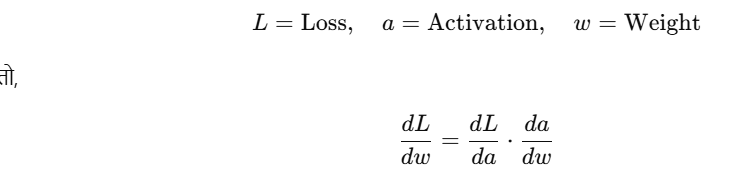
Loss L

Activation a = f(w·x + b)

Weight w

We want:

PyTorch में Automatic Chain Rule

import torch

x = torch.tensor(2.0, requires_grad=True)
y = x**2 + 3 * x + 1

y.backward()
print("dy/dx:", x.grad) # Output: dy/dx = 2x + 3 = 7

🎯 Chapter Objectives (लक्ष्य)

  • Partial Derivative की परिभाषा और गणना समझना
  • Chain Rule के पीछे का सिद्धांत जानना
  • Deep Learning में gradient propagation कैसे होता है, इसे समझना
  • Real model में gradients कैसे जुड़ते हैं, यह देखना

📝 अभ्यास प्रश्न (Practice Questions)

  1. Partial Derivative किसे कहते हैं? उदाहरण सहित समझाइए।
  2. Chain Rule का उपयोग कहाँ किया जाता है?
  3. Deep Learning में Chain Rule का वास्तविक उपयोग किस चरण में होता है?
  4. नीचे दिए गए कोड का आउटपुट क्या होगा?
x = torch.tensor(3.0, requires_grad=True)
y = (2*x + 1)**2
y.backward()
print(x.grad)